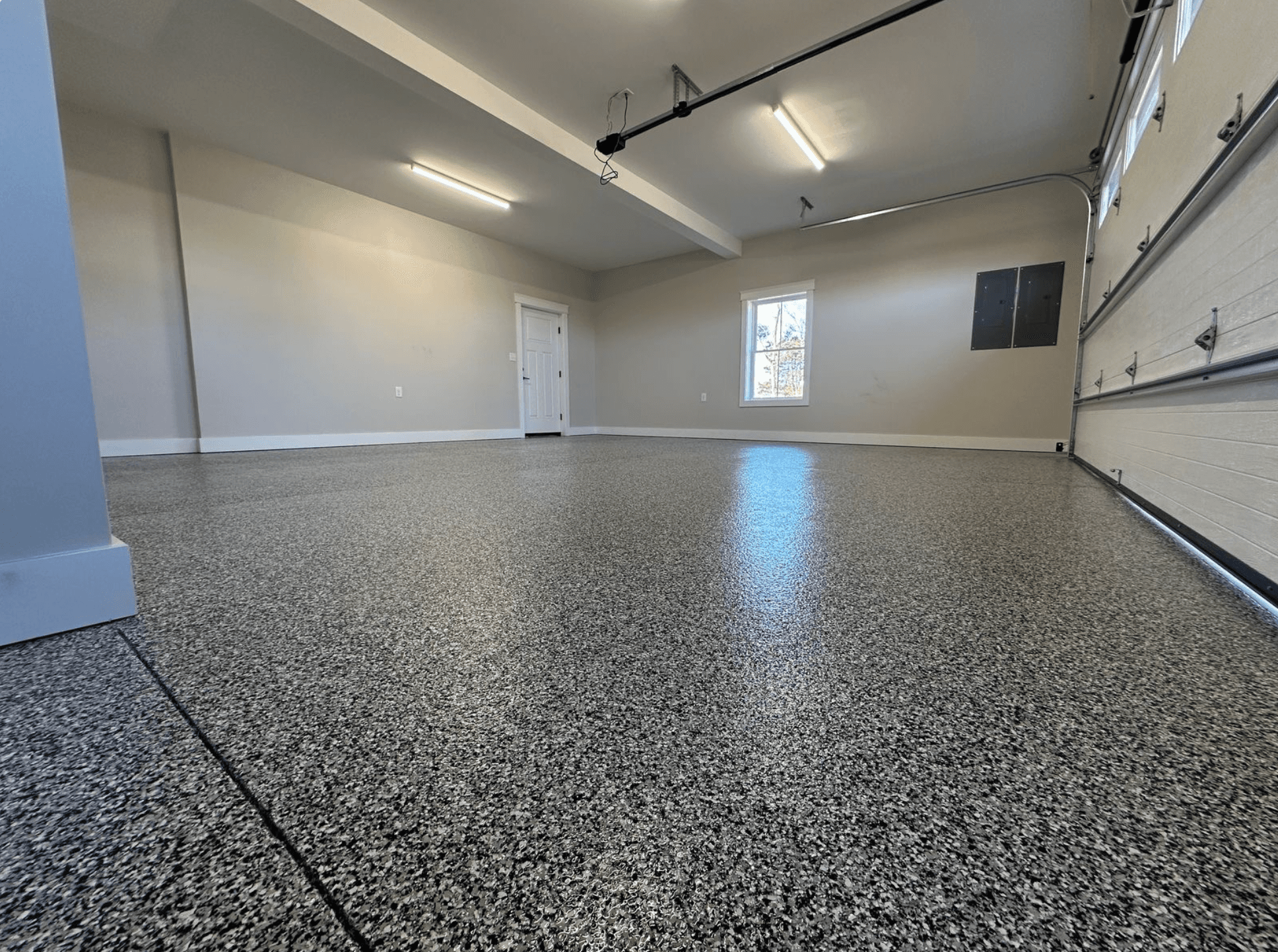
Polyurea Floor Coating
Flexible, Impact-Resistant Polyurea Floor Coating in Tampa Bay, FL
Get a Free Polyurea Floor Coating Estimate
Fill out the form — we'll reply within 24 hours.
What Is Polyurea Floor Coating?
Polyurea is a high-performance elastomeric coating that combines extreme durability with exceptional flexibility. Unlike epoxy, which is rigid and can crack under impact or slab movement, polyurea flexes with the concrete — making it virtually unbreakable under normal use.
The chemistry is a rapid-reaction system where an isocyanate component and a resin blend are sprayed through a specialized gun. The material cures within seconds to minutes, creating a seamless, waterproof membrane that bonds permanently to the concrete.
Polyurea's flexibility makes it the go-to choice for floors that experience heavy impacts, thermal cycling, or structural movement — environments where rigid coatings inevitably fail. It's the standard specification for loading docks, freezer warehouses, bridge decks, and secondary containment areas.
Key Benefits of Polyurea Floor Coatings
Exceptional Flexibility
Polyurea can stretch and return to its original shape without cracking. It bridges concrete cracks up to 1/8" wide — epoxy would crack under the same movement.
Impact & Abrasion Resistance
Polyurea is significantly tougher than epoxy. It withstands dropped tools, forklift traffic, pallet jacks, and heavy equipment without chipping or cracking.
Rapid Cure Time
Polyurea cures in seconds to minutes — return to foot traffic within hours and vehicle traffic within 24 hours. Minimal downtime for commercial operations.
Chemical & Moisture Resistant
Forms a seamless, waterproof membrane that resists chemicals, oils, solvents, and moisture vapor transmission. Ideal for secondary containment and wet environments.
Thermal Stability
Performs across a wide temperature range from -30°F to 250°F. No softening in heat, no brittleness in cold. Ideal for freezer warehouses and hot manufacturing environments.
Seamless & Waterproof
Spray-applied as a continuous membrane with no seams, joints, or weak points. 100% waterproof when applied at the proper thickness.
Polyurea vs. Polyaspartic: What's the Difference?
Both polyurea and polyaspartic are fast-cure, high-performance coatings, but they serve different purposes:
Polyurea: Maximum flexibility and impact resistance. The most durable coating available. Cures in seconds. Thicker application (up to 1/4"). Ideal for industrial floors, loading docks, and areas subject to heavy impact and thermal cycling.
Polyaspartic: UV-stable with excellent appearance. Cures in hours (not seconds). Thin-film application (10–20 mils). Ideal for garage floors, showrooms, and areas where appearance matters.
Which should you choose? For residential garages and showrooms where appearance is priority, choose polyaspartic. For industrial floors, loading docks, and heavy-impact areas where durability is the only priority, choose polyurea.
Ideal Applications for Polyurea Floor Coatings
- Industrial warehouses with heavy forklift traffic
- Loading docks and shipping/receiving areas
- Cold storage and freezer warehouses
- Food processing facilities requiring thermal cycling resistance
- Secondary containment areas and chemical storage
- Aircraft hangars and maintenance bays
- Parking garages and ramps
- Bridge decks and infrastructure coatings
- Water and wastewater treatment facilities
- Any floor subject to impact, thermal cycling, or crack movement
Our Polyurea Application Process
1. Surface Preparation: Concrete is diamond-ground or shot-blasted to a clean, profiled surface. Cracks and joints are repaired.
2. Priming: A specialized polyurea or epoxy primer is applied to seal the concrete and ensure maximum adhesion.
3. Polyurea Spray Application: The polyurea material is heated and applied through plural-component spray equipment. The material cures within seconds, so multiple coats can be applied in a single day.
4. Texture Finish (Optional): For slip-resistant surfaces, aggregate can be broadcast into the final coat.
5. Topcoat (Optional): A UV-stable polyurethane topcoat can be applied if the floor will be exposed to direct sunlight — standard polyurea is not UV-stable and will yellow over time.
6. Return to Service: Foot traffic within 2–4 hours. Vehicle traffic within 24 hours. Full chemical cure in 7 days.
Frequently Asked Questions
How much does polyurea floor coating cost in Tampa Bay? Polyurea systems typically range from $8–$15 per sq. ft. installed, depending on thickness, reinforcement, and whether a UV-stable topcoat is required. We provide free on-site evaluations.
Is polyurea suitable for residential use? For most residential garages, polyaspartic is a better choice — it's more affordable and offers better appearance with UV stability. Polyurea is specified when maximum impact resistance is needed.
How long does polyurea flooring last? Polyurea is one of the most durable coating systems available. With proper installation, it typically lasts 15–25 years in industrial environments.
Does polyurea yellow in sunlight? Standard polyurea is not UV-stable and will yellow and chalk with direct sun exposure. A UV-stable polyurethane topcoat is applied for outdoor or sun-exposed installations.
Can polyurea be applied over existing epoxy? In most cases, existing coatings must be removed before polyurea application. The rapid cure chemistry requires proper substrate preparation for reliable adhesion.
Our Work
See examples of our polyurea floor coating projects
Other Services
Explore our full range of concrete coating solutions
Polyurea Floor Coating FAQs
Common questions about our polyurea floor coating service
Polyurea uses an amine-based chemistry that cures within seconds. Polyurethane uses a hydroxyl-based chemistry that cures over hours. Polyurea is tougher and more flexible; polyurethane is typically used as a thinner topcoat for UV protection.
Ready to Get Started?
Contact us today for a free consultation and quote for your polyurea floor coating project